Meha Kabra, PhD, from University of Wisconsin Awarded $90,000 Knights Templar Eye Foundation Grant for Congenital Stationary Night Blindness Treatment Research
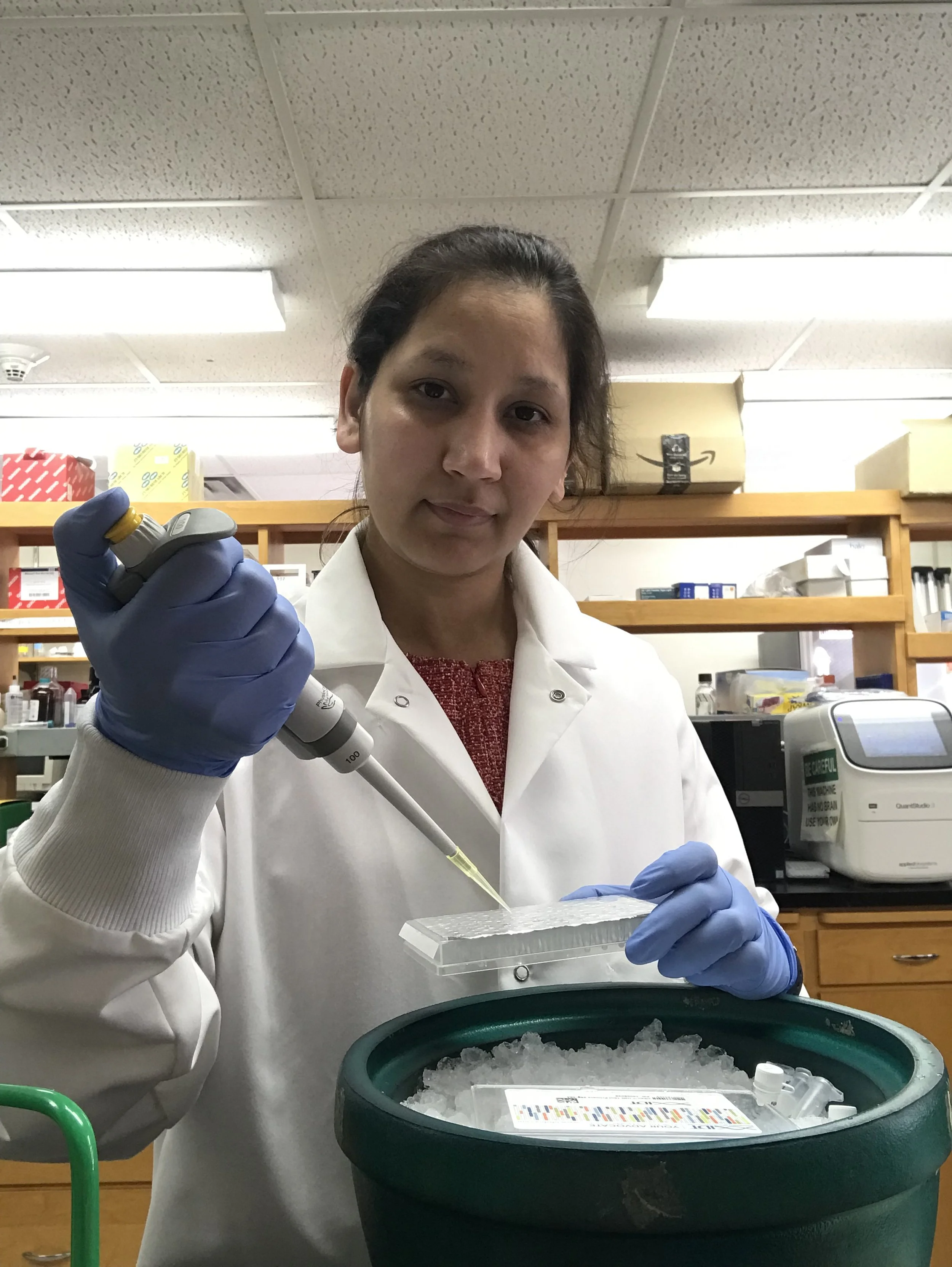
Meha Kabra, PhD, from the University of Wisconsin, Madison, was awarded a $90,000 grant for Therapeutic genome editing of the large CACNA1F gene for the treatment of congenital stationary night blindness type 2 (CSNB2).
CSNB2, Congenital Stationary Night Blindness, occurs due to mutations in the CACNA1F gene. This gene makes a protein subunit α1, which combines with other subunits (β and α2δ4) to form the complete multimeric ion channel, Cav1.4. This protein is essential in photoreceptors (PRs) to transmit the signal to bipolar cells.
Currently, there is no cure for CSNB2. Therefore, the present study is designed to generate tools to investigate the potential of genome editors (adenosine base editors, ABE, and prime editors; PE) for correcting the CACNA1F mutation in PRs and make the channel functional. Dr. Kabra will package a shorter and effective version of ABE in a single AAV and a split version of PE in dual-AAV to edit R898X mutation in CSNB2 mice. Viruses will be produced using a modified capsid protein, which can effectively transduce PRs intravitreally (a less invasive route).
The study, when completed, will make a broad and sustained impact in the genome editing field and help her to 1) Develop optimal ABE and PE for other inherited retinal diseases affecting the PRs. 2) Evaluate the effectiveness and safety of future genome editing translations in the clinic. 3) Establish an editing threshold required to rescue the CSNB2 phenotype.
Dr. Kabra’s approach will answer several important questions: 1) Can genome editors correct gene mutations precisely? 2) Does gene correction restore the channel function? 3) Is biallelic editing necessary for the channel function? 4) Can PRs be efficiently targeted intravitreally? 5) What would be the long-term off-target effect of CRISPR AAVs?