Sangeetha Kandoi, PhD, from Johns Hopkins University Awarded $90,000 Knights Templar Eye Foundation Grant for Retinal Dystrophy Research
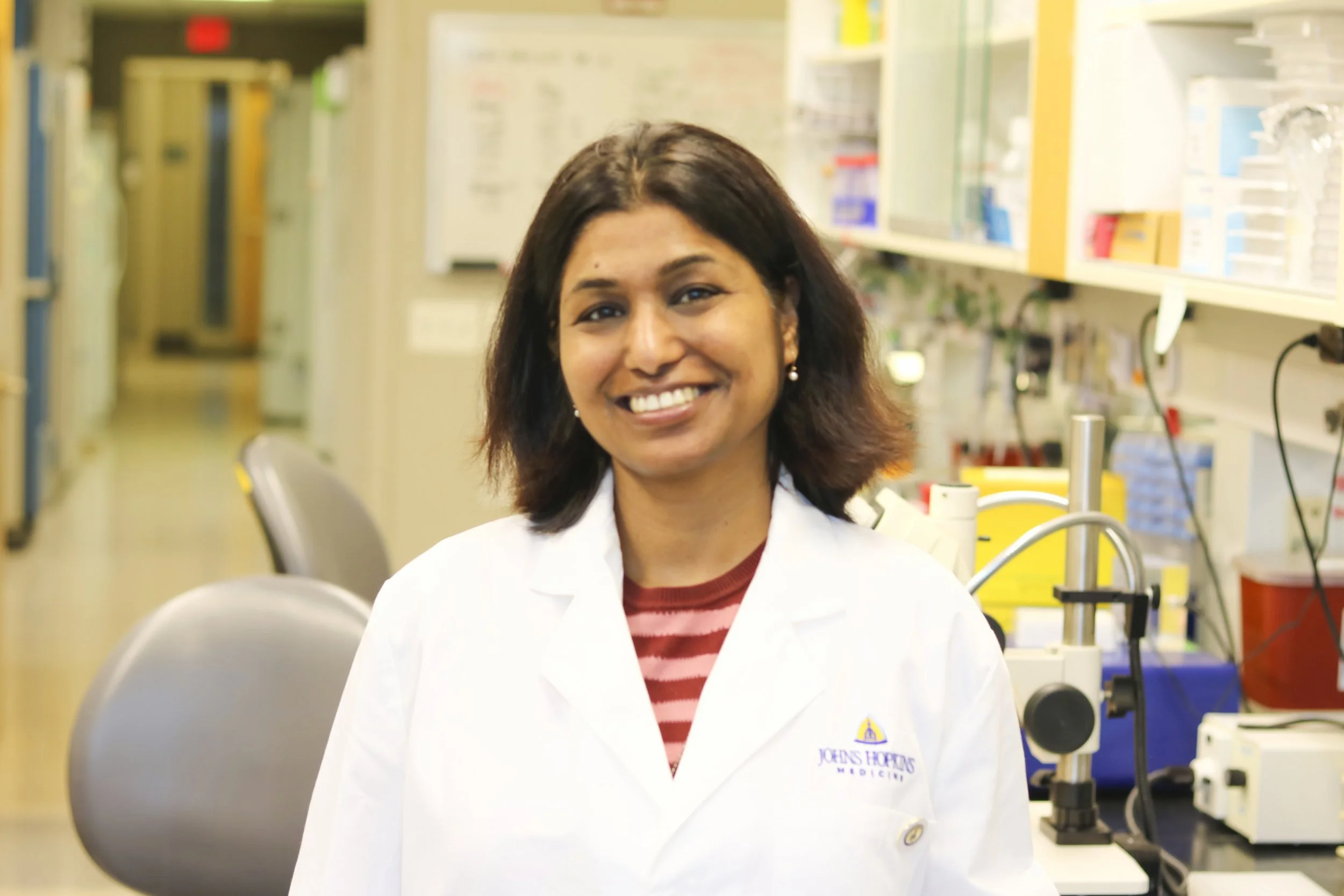
Sangeetha Kandoi, PhD, from the Department of Neuroscience, Johns Hopkins University School of Medicine, was awarded a $90,000 grant for Multimodal Investigation of Cone Photoreceptor Regulators in Tree Shrew Retina.
Leber congenital amaurosis (LCA) and early-onset severe retinal dystrophy (EOSRD) are a group of inherited, early-onset retinal dystrophies affecting ~1 per 33,000-81,000 newborns and account for 5% of retinal dystrophies. Both diseases result in the loss of the retina’s light-sensing photoreceptors (cones and rods) at birth or before 1-yr of age, leading to severe vision loss in children. While 25 different mutations can lead to these diseases, some mutations affect only the ‘cones’ found in a tiny region of the central retina (just 0.02% expanse), yet this tiny loss profoundly degrades high-acuity and color vision. With no effective treatments for LCA or EOSRD available, transplanting stem cell-derived “mini retinas” (i.e. retinal organoids) is a plausible therapeutic option for replacing lost cones.
Unfortunately, traditional models like mice and rats do not have a cone-rich central retina, nor do current human retinal organoid model. Building on her solid track record with generating retinal organoids and studying cone development, Dr. Kandoi proposes to take full advantage of the cone-dominant, primate-like tree shrew (TS) to address this gap. She will use TS organoids to discover important signal molecules that cue the development of cones, cross-referenced with TS embryos and newborns data. Then she will test these molecules’ roles using gene-editing approaches in TS organoid. By understanding the molecular details of cone development in the TS organoid, Dr. Kandoi will create a roadmap for generating cone-rich human retinal organoids. These mini-retinas-in-a-dish can be versatile tool in the treatment of LCA, EOSRD, and other retinal dystrophies.