Jose Raul Perez-Estrada, PhD, from Miami Awarded $90,000 Knights Templar Eye Foundation Grant for The Metabolic Paradigm in Eye Development and Regeneration
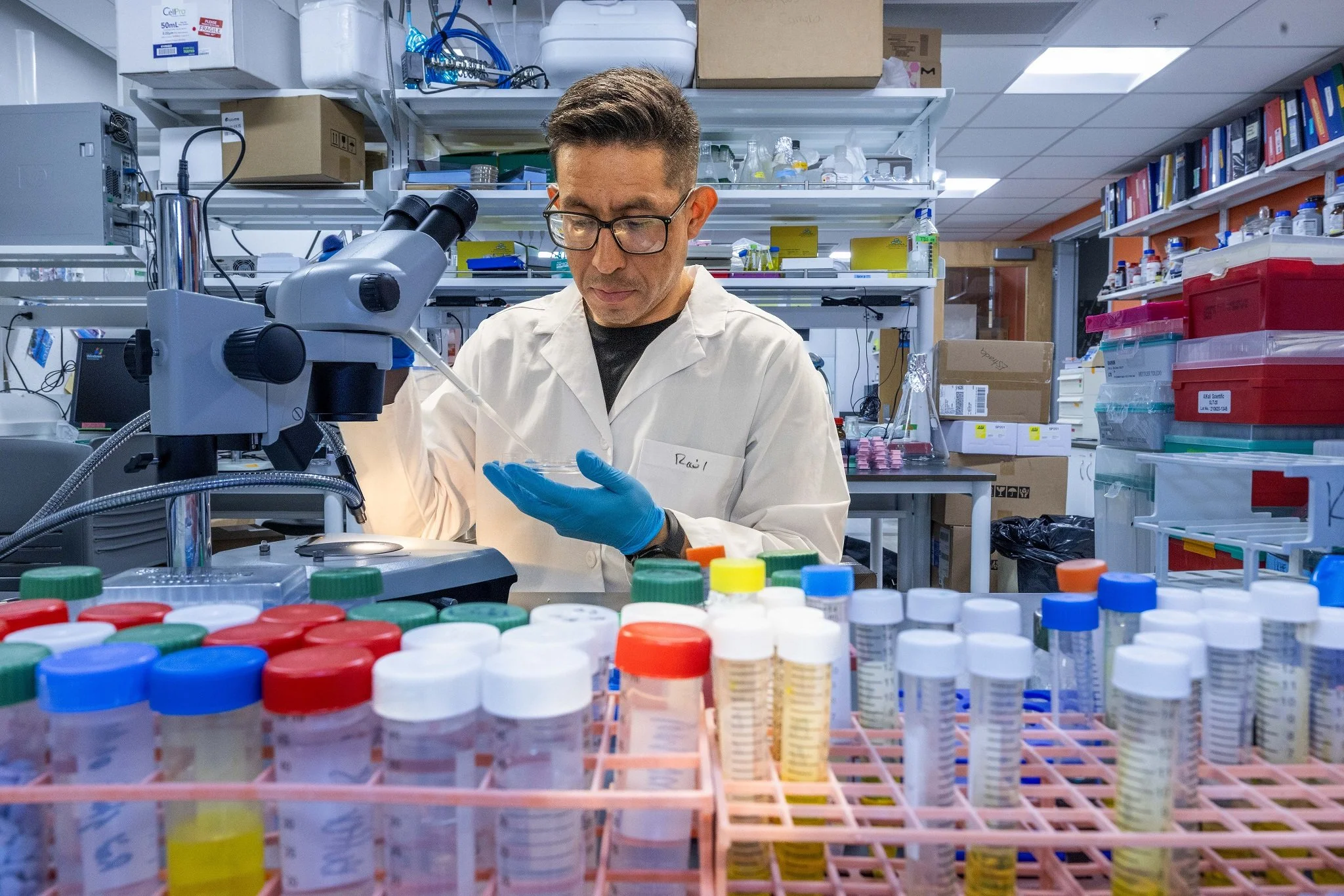
Jose Raul Perez-Estrada, PhD, from the Miami University Department of Biology, was awarded a $90,000 grant for The Metabolic Paradigm in Eye Development and Regeneration.
Regeneration of lost parts of the body has fascinated humanity since remote times, inspiring myths and legends, but also a scientific curiosity to know why some animals regenerate more than humans. In Greek mythology, an example of regeneration is the Lernean Hydra, a giant water snake-like monster with nine heads, that regenerated each head when cut off. In recent times, the best example of a fictional regeneration figure is Wolverine, a superhero in X-Men comics. Wolverine’s superpower is not to control minds or the ability to shoot rays; his superpower is too simple: to be able to heal and regenerate fast. Thus, regeneration makes Hydra and Wolverine almost immortal beings that do not develop diseases. Newts are animals that, like Hydra, can form a new structure of the eye after being cut off and heal their eye after an injury, just like Wolverine does.
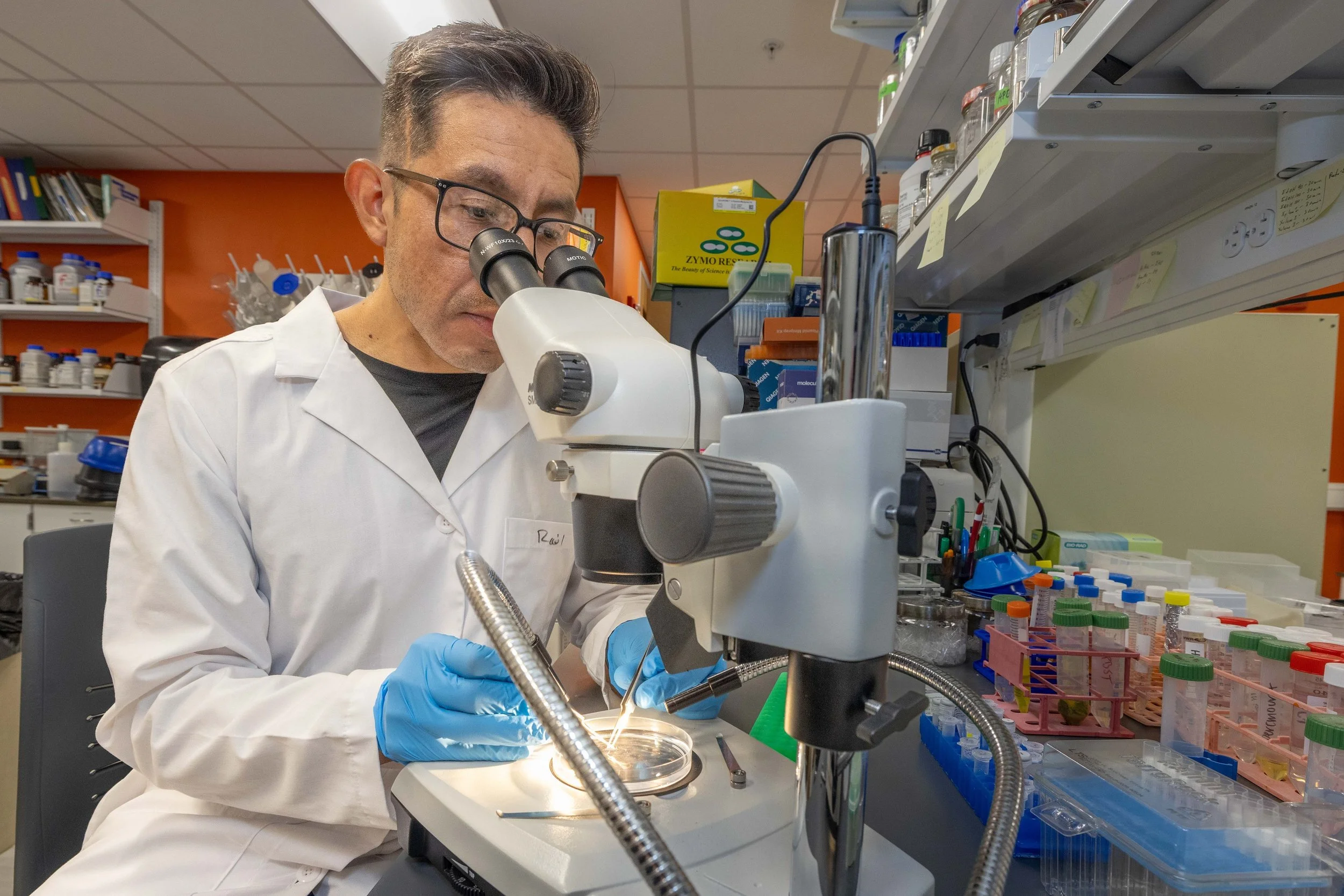
Thus, by studying newts, Dr. Perez-Estrada could learn from their regenerative superpower and apply it to humans to cure diseases. However, regenerating parts of the body or forming a new organism requires energy, just as common tasks such as walking or swimming do. The energy animals use is obtained from food by a complex biochemical reaction called metabolism. However, how metabolism controls the formation of new organisms or regeneration is not understood.
Because of that, Dr. Perez-Estrada’s project proposes to investigate the role of metabolism in eye formation and regeneration using newts to learn more about newt’s superpowers to be applied to cure children’s diseases.