
Aniket Ramshekar, MD, PhD, from Stanford Ophthalmology Advanced Research (SOAR) Residency Program Awarded a $90,000 Knights Templar Eye Foundation Grant for Retinopathy of Prematurity Research
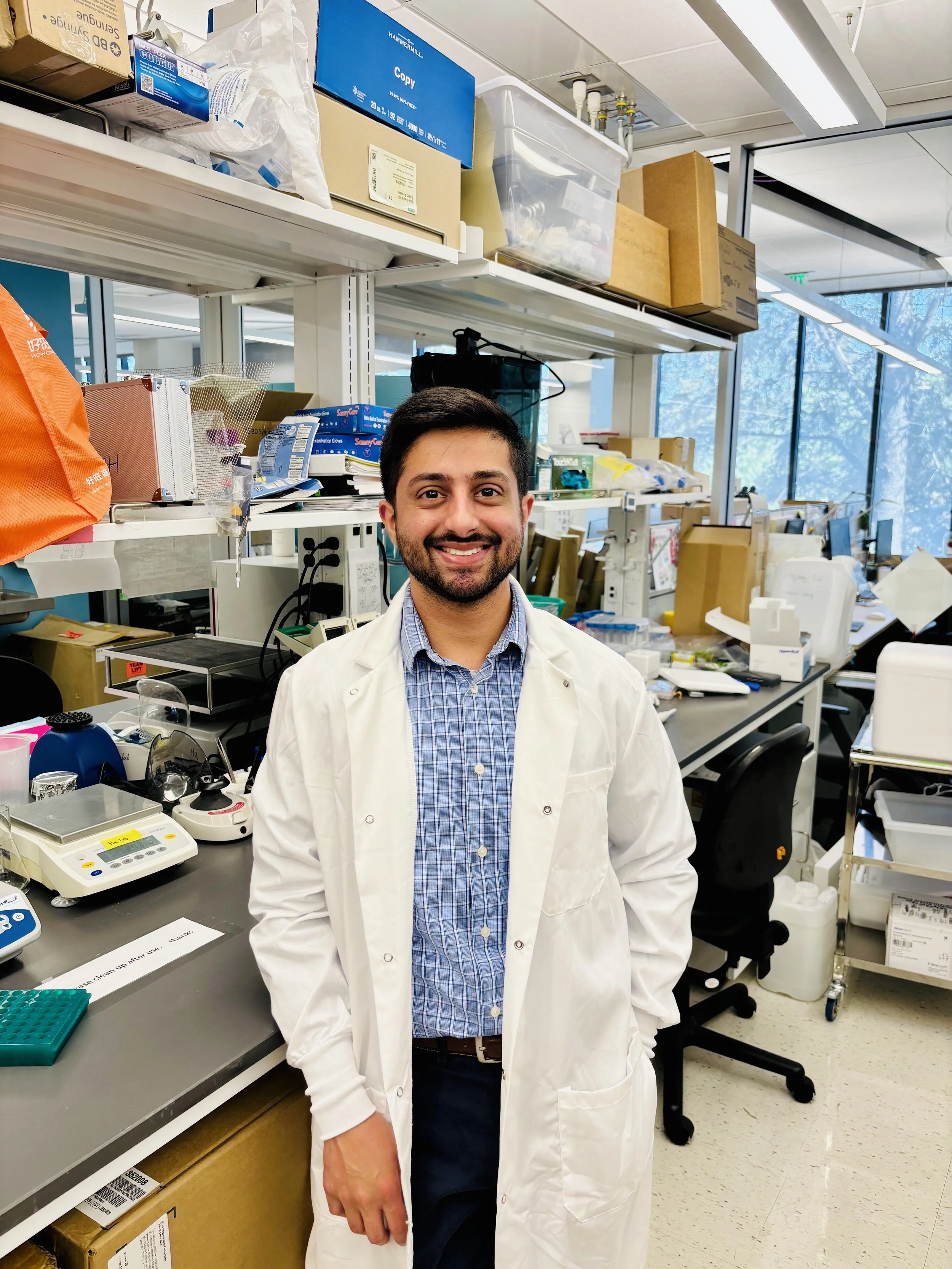
Aniket Ramshekar, MD, PhD, from Stanford Ophthalmology Advanced Research (SOAR) Residency Program, Stanford University School of Medicine, was awarded a $90,000 grant for Investigating the role of VEGFR2 Mediated Signaling in Retinal Ganglion Cells in a Model of Retinopathy of Prematurity.
Retinopathy of prematurity (ROP) remains a leading cause of childhood vision loss worldwide despite advances in neonatal care. Vision loss in ROP occurs when blood vessels in the retina grow abnormally, failing to provide adequate nutrient support to the developing retina. The abnormal growth of retinal blood vessels in ROP is triggered by a protein called vascular endothelial growth factor (VEGF). VEGF plays a critical role in the formation of blood vessels, but excessive VEGF can lead to the disorganized growth seen in ROP. One approach of treating ROP involves injections into the eye to administer agents that interfere with VEGF signaling. These treatments aim to reduce abnormal blood vessel growth and prevent further retinal damage. However, there are concerns that interfering with VEGF signaling could also affect other retinal cells, such as retinal neurons, which are essential for vision.

In this research project, Dr. Ramshekar, focuses on the role of VEGF signaling in the development of retinal ganglion cells – a specific type of retinal neuron. He predicts that VEGF signaling is needed not only for retinal blood vessel growth but also for retinal ganglion cell development in the retina. The data from this project will better define the role of VEGF signaling in the development of retinal neurons. This research has the potential to provide new insights into how doctors can better treat and prevent vision loss in children affected by ROP.