
Boston Children’s Hospital’s Sampath K. Vemula, PhD, Receives $90,000 KTEF Grant to Investigate Nystagmus
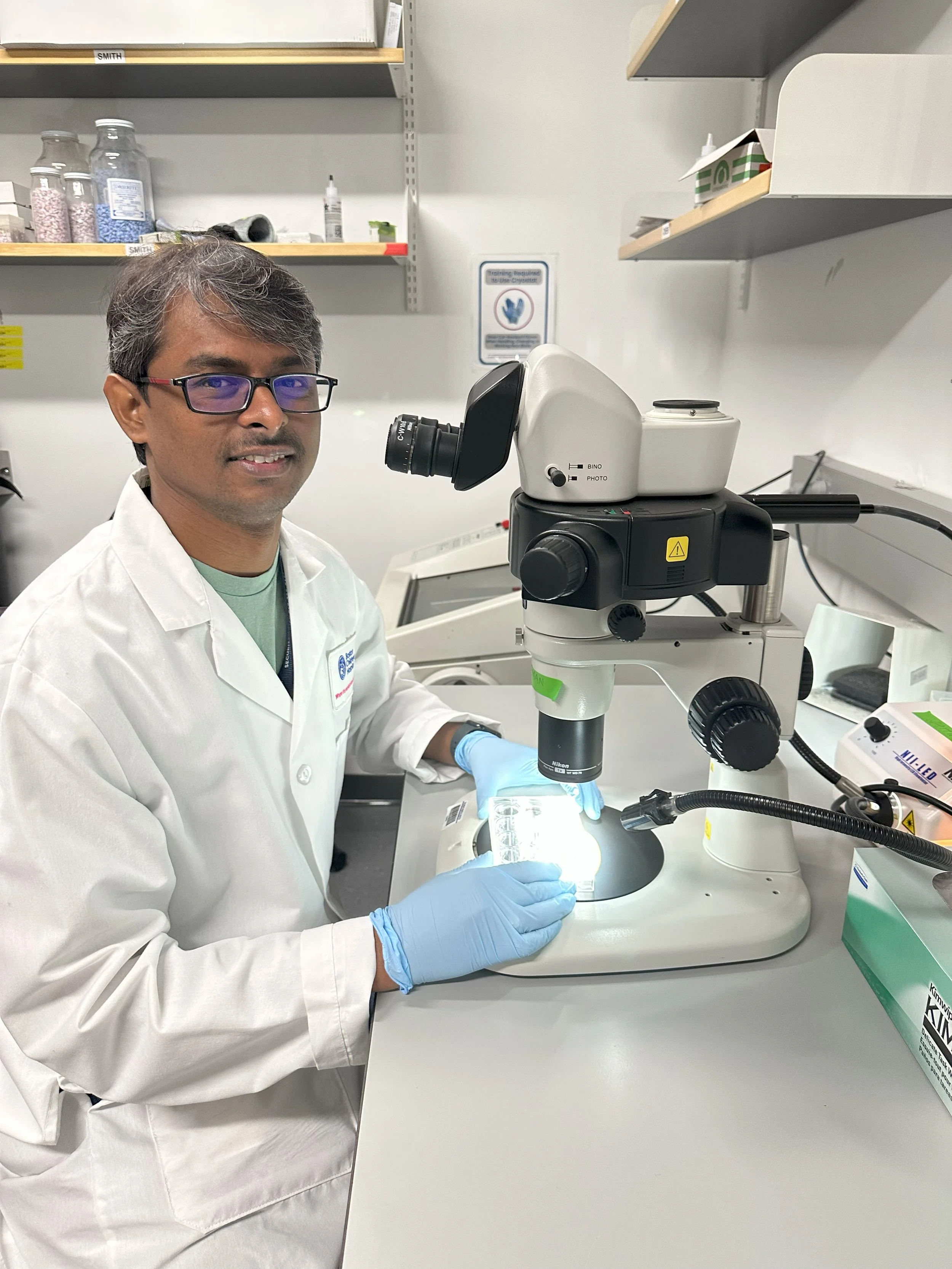
Sampath K. Vemula, PhD, from Boston Children’s Hospital Harvard Medical School, was awarded a $90,000 grant for Investigation of VEGF-A as a Therapeutic Target for Nystagmus.
Infantile nystagmus syndrome (INS) is characterized by involuntary eye movements beginning at birth. It affects 1 in 800 children. Nystagmus patients have difficulties with many visual tasks. A common cause of INS is albinism, a condition resulting from impaired melanin production in the hair, skin, and eyes. More than 90% of patients with albinism have nystagmus. Nystagmus in albinism was believed by scientists to be secondary to poor vision.
Dr. Vemula recently found conflicting evidence that changes in the extraocular muscles (EOMs) associated with nystagmus are present before eye opening in albino mice, so they cannot be secondary to poor vision. The mice in his study have a genetic mutation in the tyrosinase gene, but tyrosinase is not expressed in the EOMs. However, tyrosinase is expressed in the retinal pigment epithelium (RPE) (the pigmented layer behind the retina). Dr. Vemula recently discovered increased expression of VEGF-A (vascular endothelial growth factor A) in the RPE of albino mice and hypothesize that the secretion of VEGF-A leads to the changes in the EOMs.
To understand the role of VEGF-A in EOMs, Dr. Vemula will block VEGF-A in the EOMs with a drug, aflibercept, and measure if it has any effect on either nystagmus or innervation of the EOMs. He will also identify the source of the VEGF-A in EOMs and determine if it is being secreted by RPE. If blocking VEGF-A does alter nystagmus, clinical trials could be started relatively soon, since anti-VEGF drugs are already FDA approved and used widely for other eye conditions.