
Augusta University’s Yusra Zaidi, PhD, Receives $90,000 KTEF Grant for Retinopathy of Prematurity Research

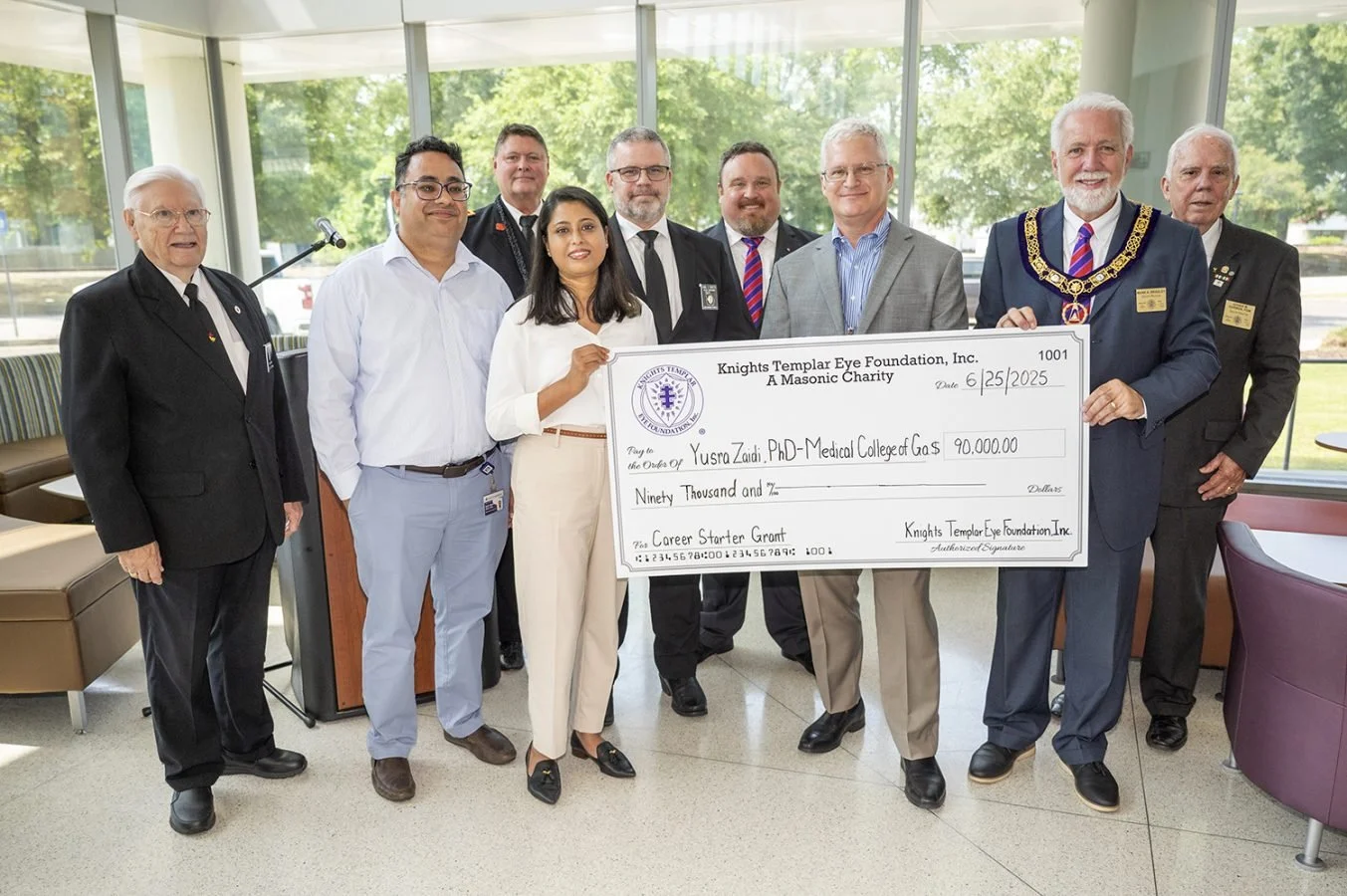
Yusra Zaidi, PhD, from the Vascular Biology Center, Augusta University, was awarded a $90,000 grant for Exogenous Apolipoprotein A1 Mitigates Inflammation and Pathological Neovascularization in the Model of Retinopathy of Prematurity.
Retinopathy of prematurity (ROP) is a disease affecting premature, very-low-birth-weight infants (< 1,500 g) who are born before physiologic development of retinal blood vessels is complete. High oxygen exposure following premature birth impairs normal retina blood vessel growth, resulting in abnormal capillary formation, termed neovascularization. Current management strategies for ROP focus on inhibiting vascular endothelial growth factor (VEGF), but emerging evidence indicates worsening neurodevelopmental outcomes in preterm infants with ROP who received anti-VEGF therapy as compared to preterm infants treated with laser photocoagulation. This underscores an urgent need for alternative therapies that limit vascular damage in ROP patients.
The blood-retinal barrier provides a safeguard to the retina; however, disruption in vascular permeability caused by fluctuating oxygen levels and inflammation permits leakage of blood proteins into the retina.
Crucially, Dr. Zaidi has identified elevated levels of the liver protein Apolipoprotein A1 (ApoA1) in the tear fluid of premature infants with ROP and in the retinas of mice exposed to OIR. Her preliminary data demonstrates that genetic deletion of Apoa1 results in the recruitment of proinflammatory macrophages/microglia into neovascular tufts and amplifies the number and distribution of neovascular tufts within the retina under OIR. Further, she also shows that recombinant ApoA1 protein possesses unique anti-inflammatory properties when tested in human microglial cells. The specific role of ApoA1 in the pathogenesis of ROP remains unknown. Dr. Zaidi will rigorously test the therapeutic potential of recombinant ApoA1 in ROP, aiming to establish its effectiveness in counteracting neovascularization in models of ROP.